REFLUXUS IV: Symphonie Fantasteeth
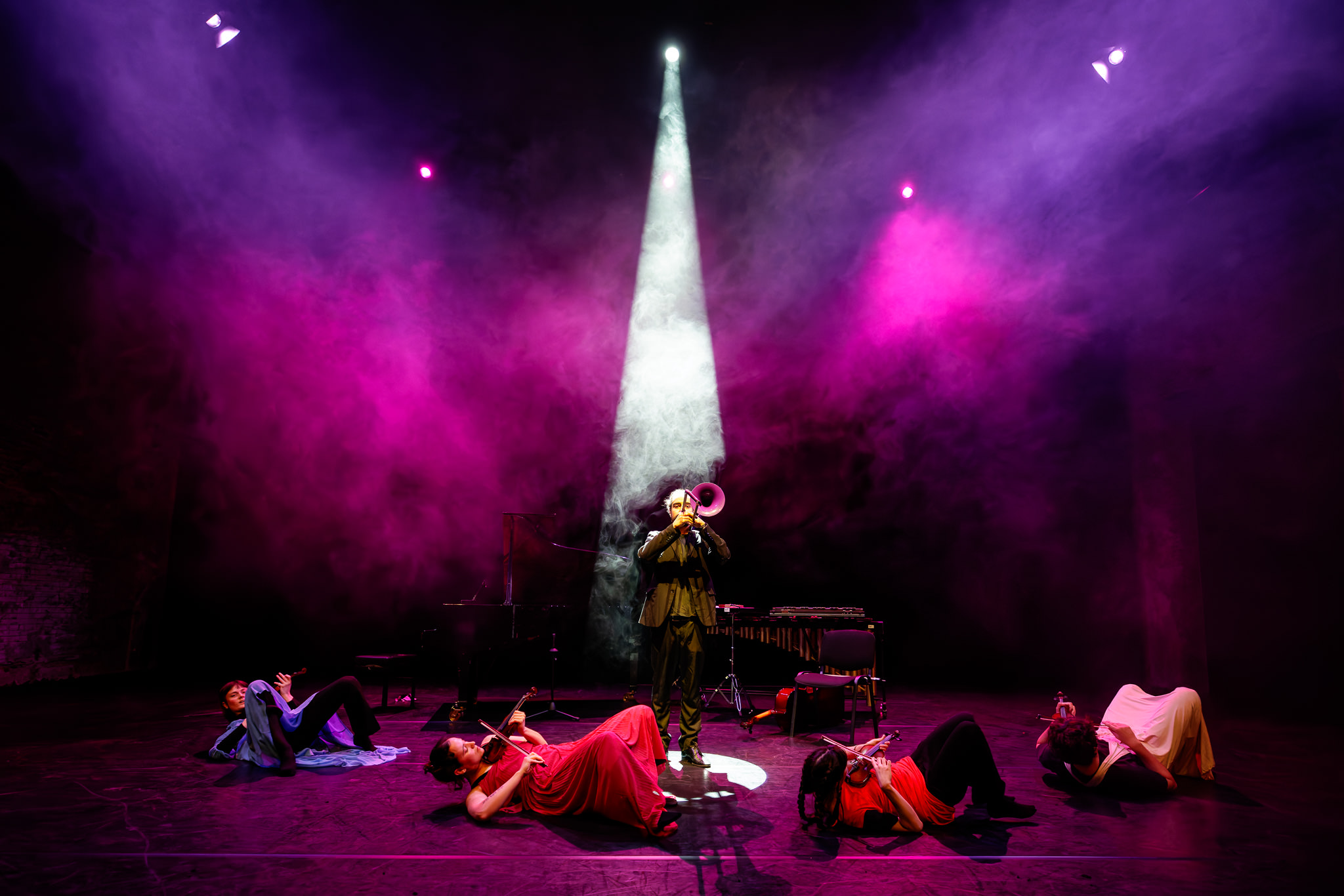
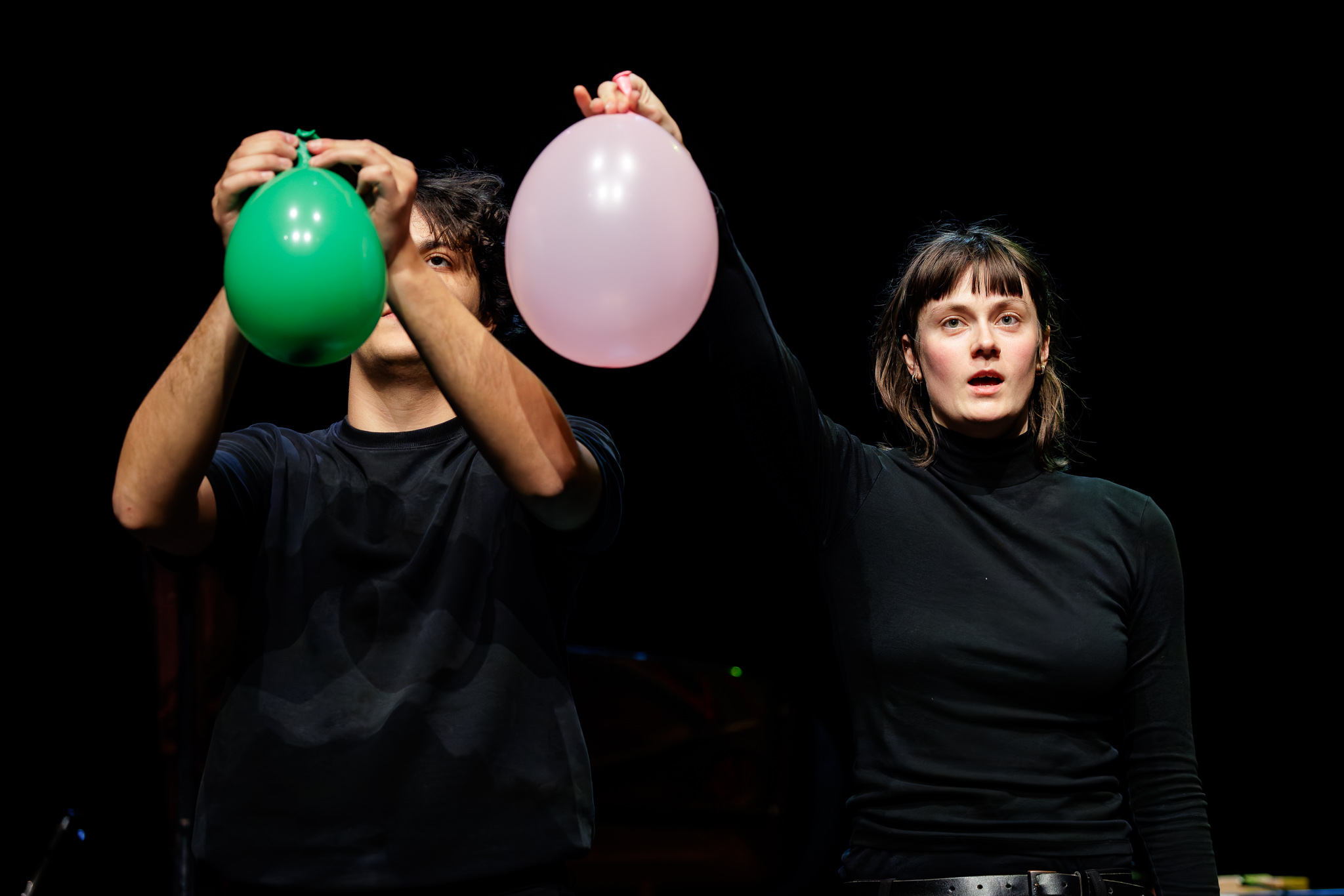
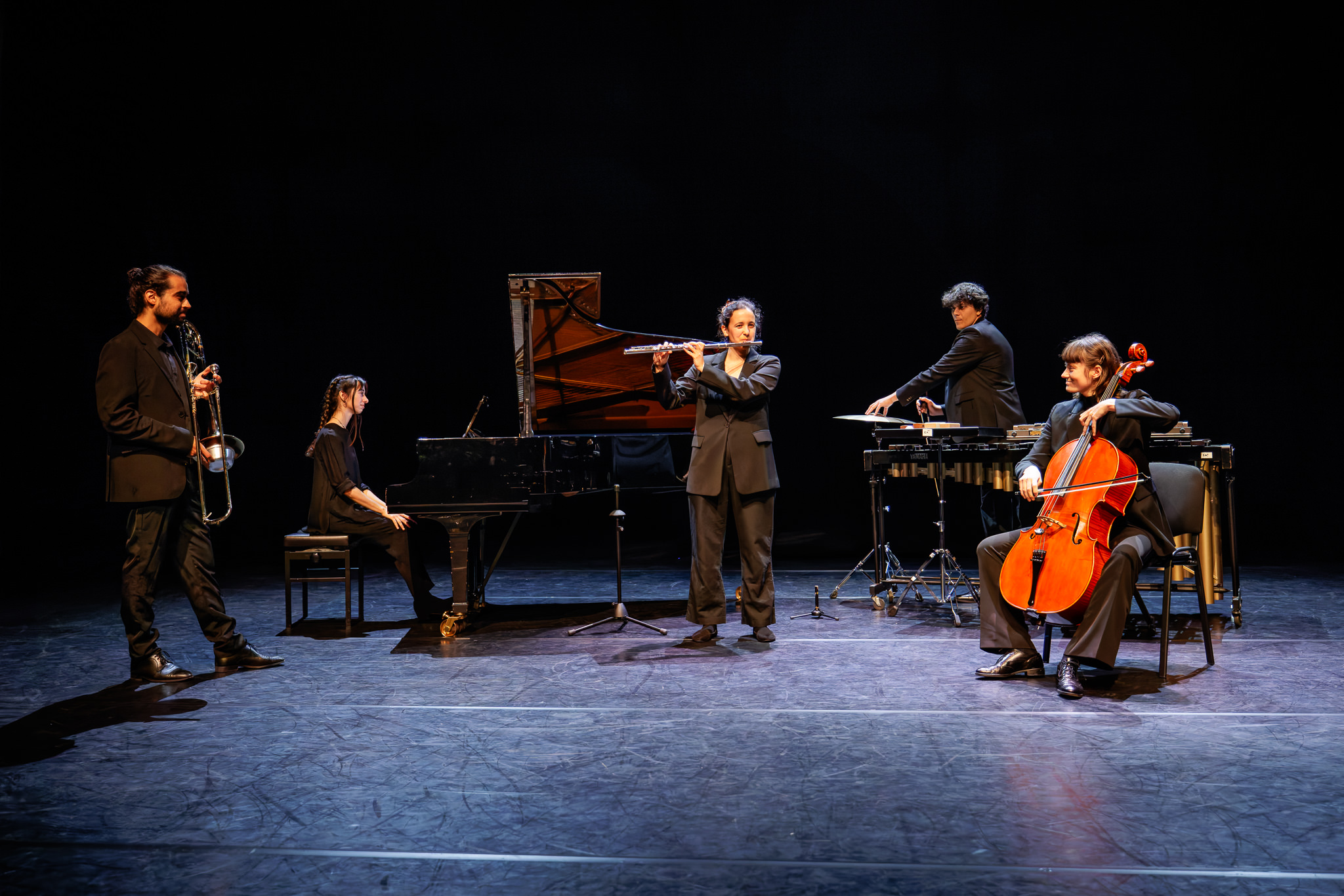
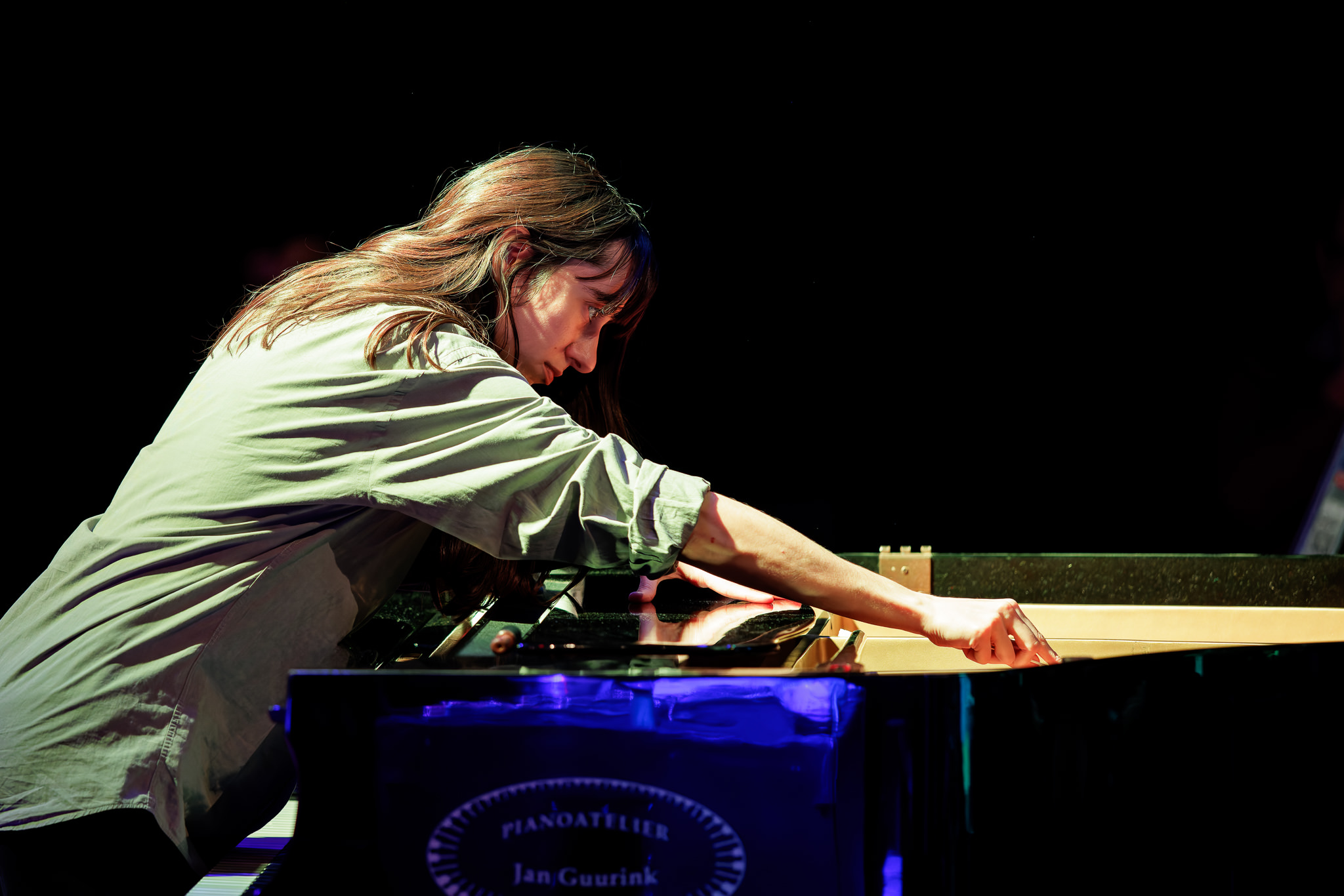
REFLUXUS IV opens by deceiving its audience. The ensemble walks on stage in the traditional all-black uniform of the classical musician. They bow (perhaps a little longer than usual) and then play a written piece, Carlos Azevedo’s “Just Five Minutes”, to the best of their abilities. From that point on, the performance descends into gradual chaos. Extremely long bows, outrageous dentures, pratfalls, purple trombones, violins played by non-violinists, tiny bicycles, balloons and eggs are just some of the ingredients.
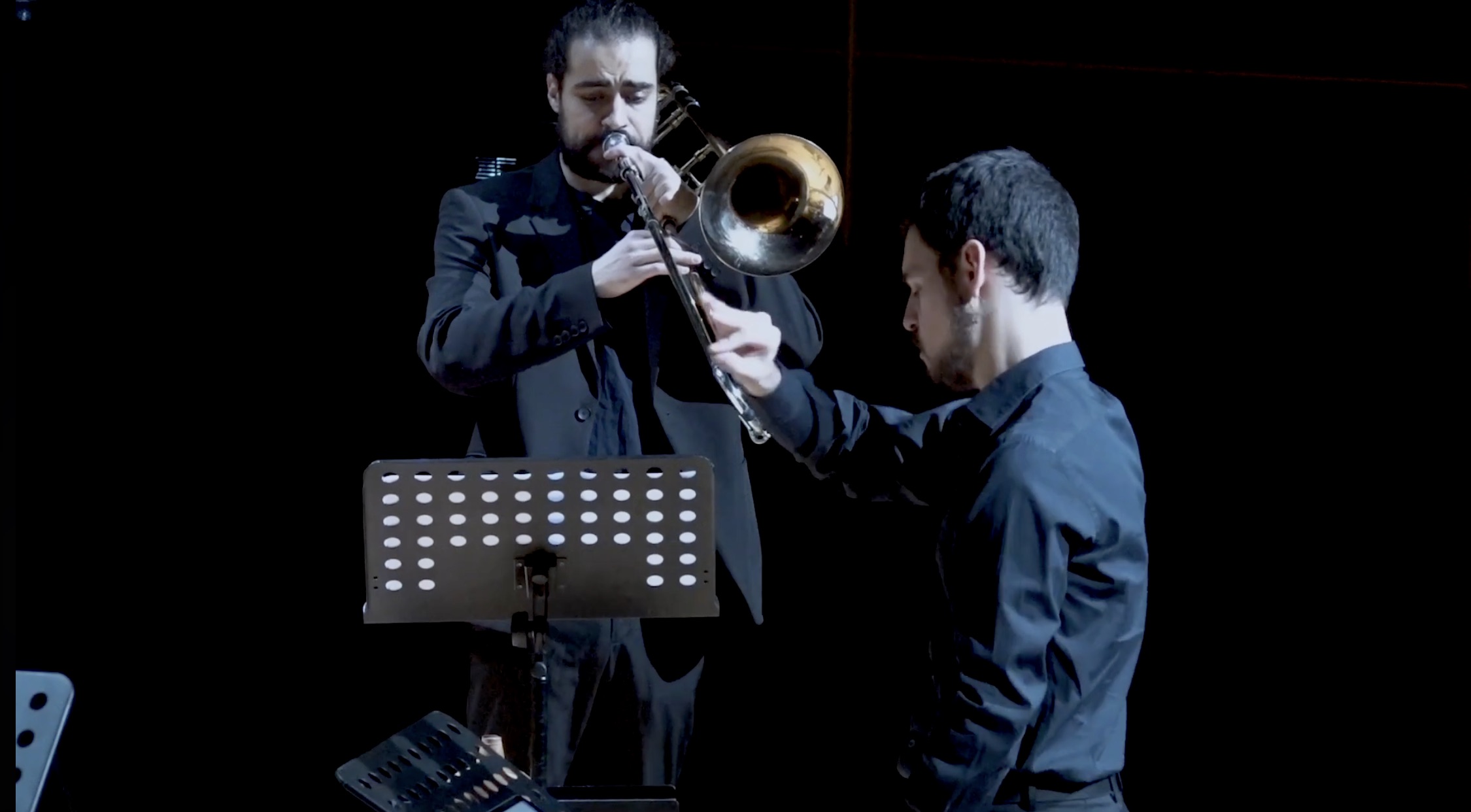
The piece is structured in three very classical movements. The first sets the tone. The second, slow and dramatic, features a “dancing” trombonist and a quartet of tiny violins crawling across the floor. The third is a fast-paced rondo that pushes meaninglessness and absurdity to their limit. As in previous Refluxus performances, the main source of material is the Fluxus Workbook. Its event scores are reappropriated, recontextualized and reinterpreted, then layered on top of one another and of improvised music. The second major source is the ensemble’s own experience: private jokes, mundane situations, and little anecdotes we trade during rehearsal breaks.
Most importantly, this is a performance about absolutely nothing. There is no underlying message, subliminal or otherwise, just an absurd overlap of scenes that we hope will spark the audience’s imagination.
picture credits: Wouter-Vellekoop
REFLUXUS III: Egg-citing – a performance on eggs and ladders
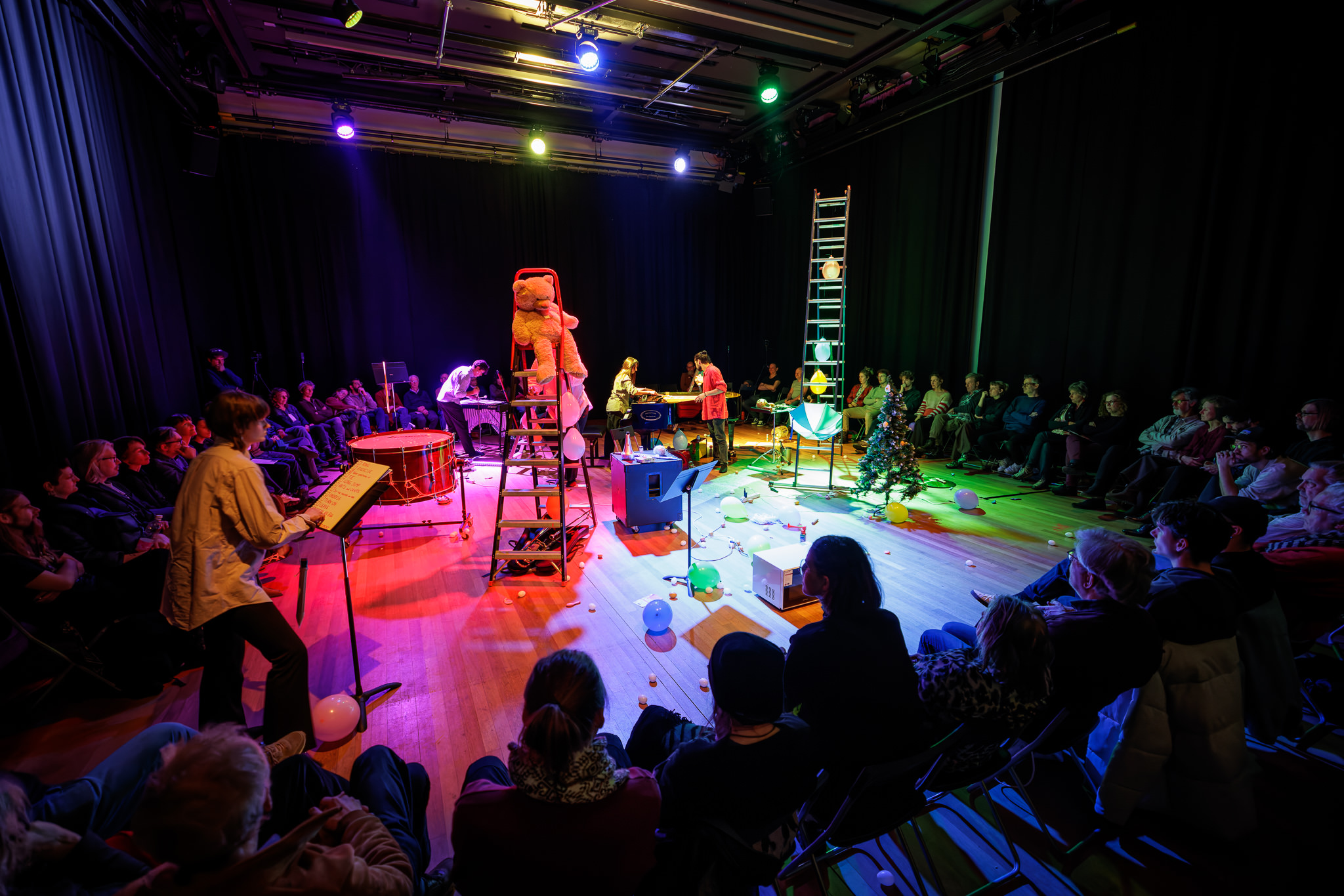
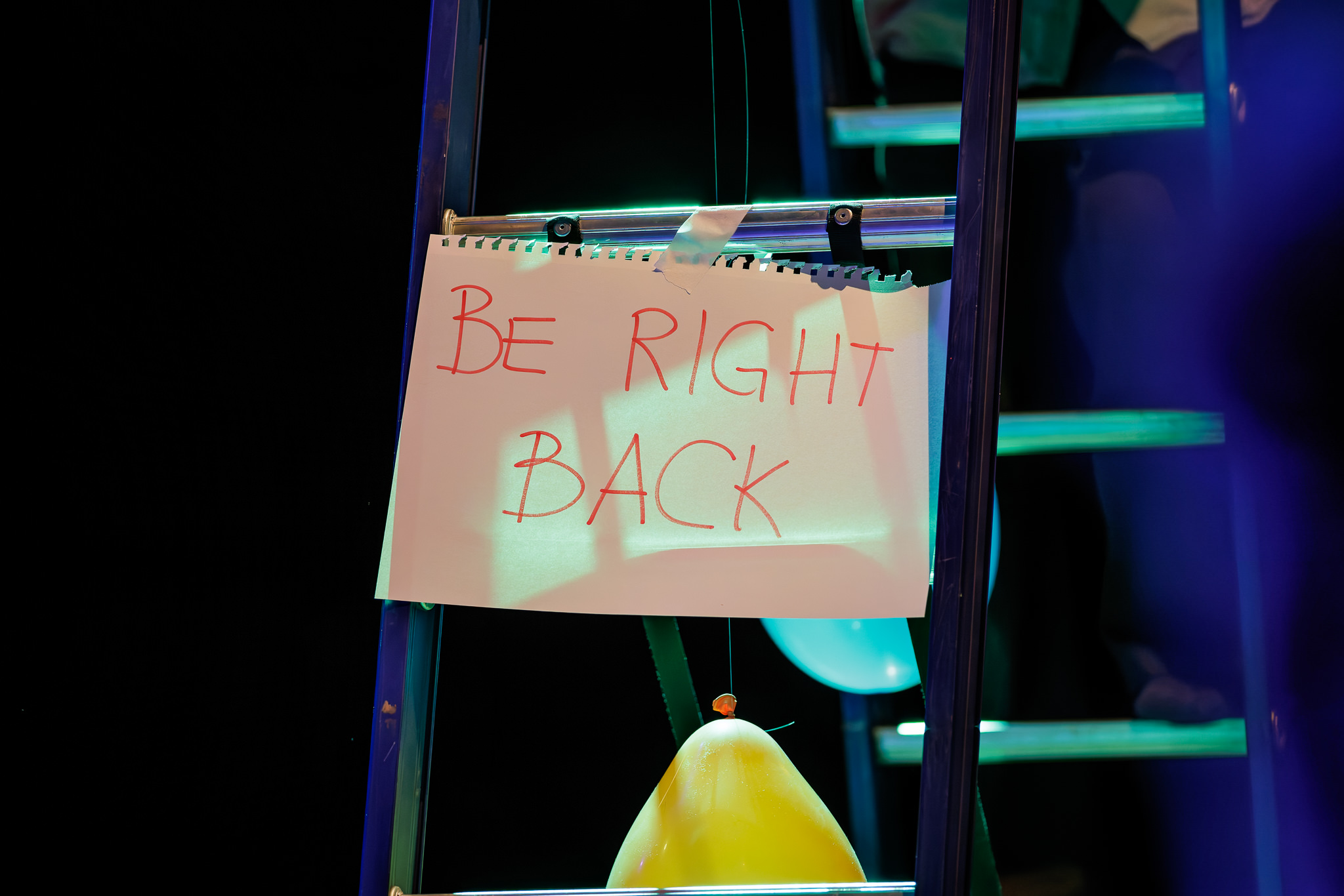
“Do you ever find yourself thinking – what do eggs and ladders have in common? Well, we’ve been haunted by this question for the past multiple years. Is there more beyond the double consonant? Can you eat ladders? Should you climb eggs? As the obsession became a reason of being, this musician’s ensemble found itself feverishly creating a performance that aims to find answers to the aforementioned doubts. Everything shy of scientific reason will be applied. Expect the most of the most organized chaos. The concept of “nothing” might gain a whole new meaning. The method is pure deniability and madness.
(Any similarity with reality is pure coincidence.)
Egg-citing was our least pre-structure performance to date and therefore what we ended up calling an exercise on artistic freedom. The main goal with it was to embrace randomness across every element, from the music to the physical actions. While certain events were agreed upon in advance, no one in the ensemble knew who would take them on, or when. The performance became, therefore, a game of action and reaction, of catching each other off guard, of trying to surprise each other on stage. It was a truly egg-celent, egg-hilarating and egg-centric experience (That CAN be repeated! Don’t egg-sitate to hire us!)
picture credits: Wouter-Vellekoop
REFLUXUS II
“I am a room with no walls, my chairs face the same way. I rumble when I’m awake, and carry strangers who never stay. Where is Sketch351 going to play?”
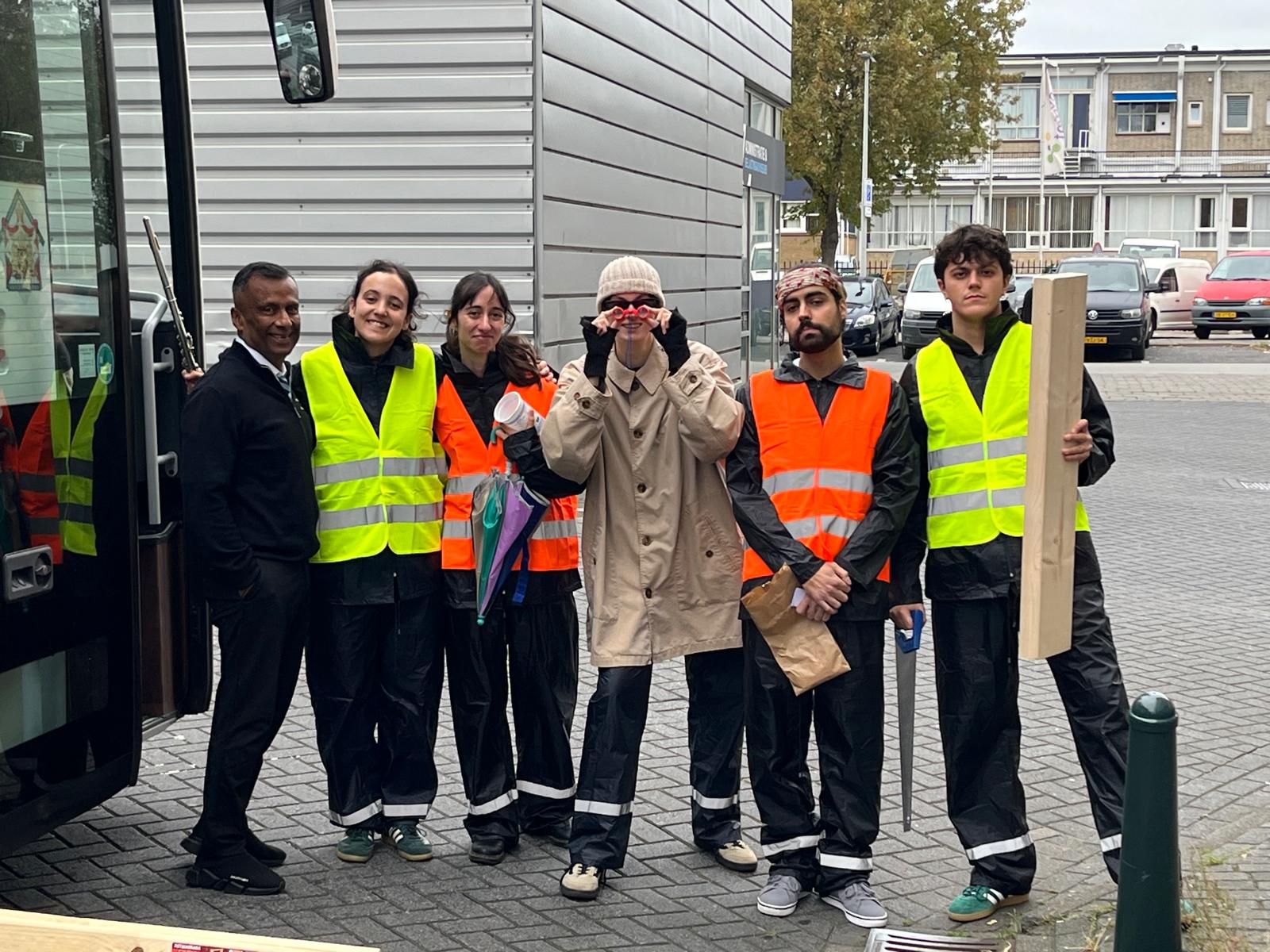
REFLUXUS II, also known as, The Wheels on the Bus, was a performance designed to take place during a bus journey from the Haags Hoog to the Nieuwe Kerk (Den Haag). The duration of the piece is not fixed so it’s shaped entirely by traffic
This performance had the special participation of Ruud, the bus driver, as well as a surprise raffle mid-trip that left one lucky audience member walking away with an amazing unforgettable prize.
October 2025
NOTE: this was our first performance with Gonçalo Martins who gained the audition to fill in the position as Sketch351’s percussionist, by performing a 5-min long drum roll during this trip
REFLUXUS I
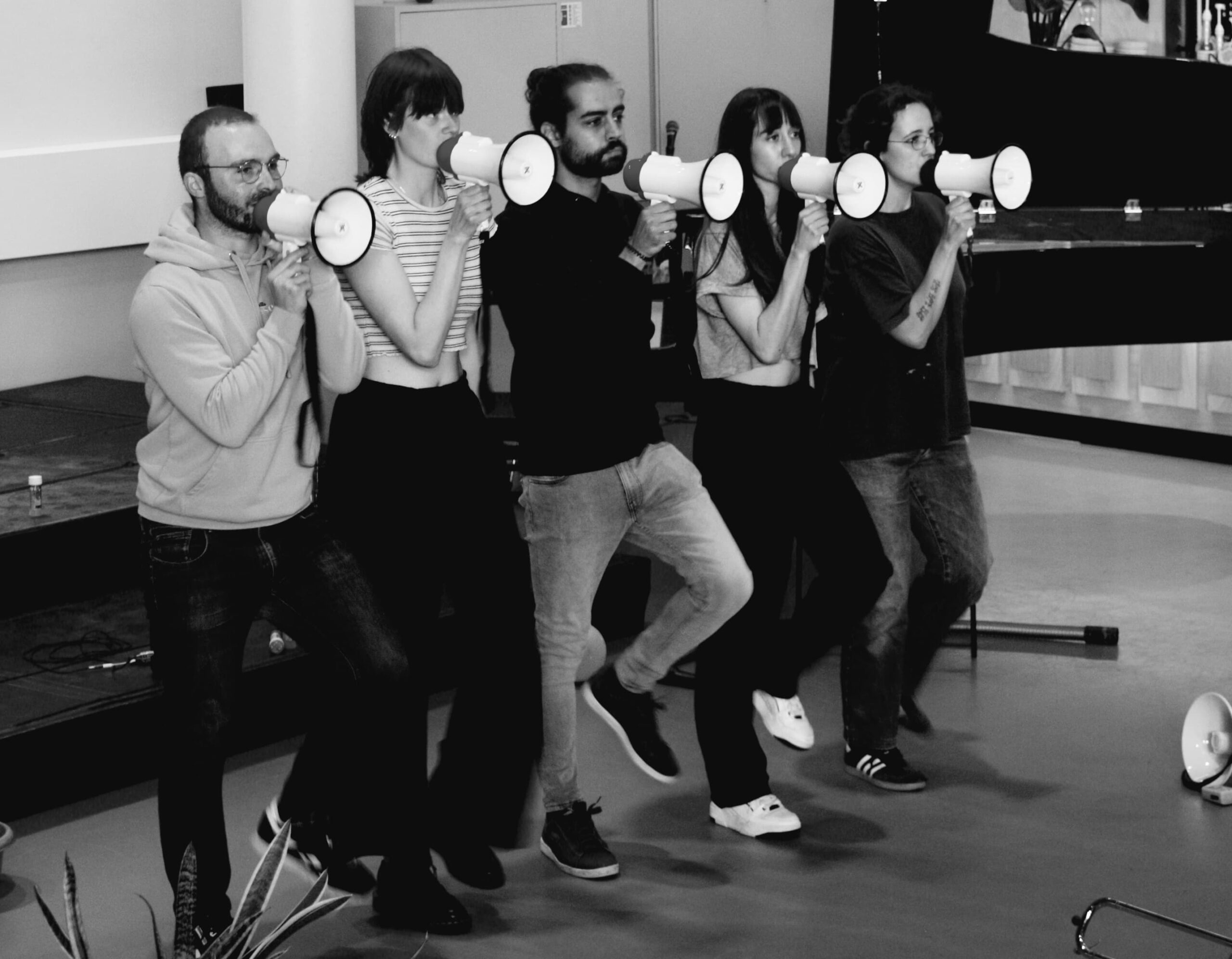
REFLUXUS I was a 30-minute pop-up performance at the Foyer of Theater aan het Spui that served as Sketch351’s introduction to Dag in de Branding’s audience. Rather than a straightforward presentation, we turned it into a near-satirical commentary on the way ensembles are typically asked to package and pitch themselves to programmers and presenters. As we were just a young and upcoming ensemble, we were not yet theater stage ready so we were asked to perform as dinner time entertainment.
The performance drew on the spirit and vocabulary of Fluxus, recreating events such as Ken Friedman’s The Webster’s Dictionary, White Tooth Workshop, and Marching Band, alongside original Fluxus-inspired works of our own.
REFLUXUS I was also the final performance of percussionist Ricardo Oliveira with Sketch351. Even though he went on pursuing a better life he will always hold a special place in our hearts.
NOTE: as we were not yet confident enough in our work we did not hire anyone to capture the performance; our dear millennial friends, however, kindly took some footage with their phones
Performance video
CODAX | for ensemble with soprano – Carlos Lopes, 2024
Veronique De Raedemaeker – violin
Maria Portela Larisch – soprano
Paulo Fernandes and Carlos Correia – baroque trumpet
Sketch351
Teresa Costa – flute
Daniel Martins – trombone
Alice Andreani – cello
Inês Lopes – piano
Gonçalo Martins – percussion
Carlos Lopes on Codax:
Codax is a puzzle. It examines absence, distance, and the ever-persistent movement of sea waves, linked together through 13th century Galician-Portuguese poetry and using lighting, stage movement and acoustic spatialization. It is a performative piece for soprano and ensemble structured as a big sound arch, paying tribute to the monolithic qualities of spectral music, particularly in Gérard Grisey and Kaija Saariaho’s work.
Six music modules are uninterruptedly played, from empty to whole and back to emptiness – a solo violin starts the performance; a soprano moves carefully in the hall and guides us through the piece; two baroque trumpets play ancient fanfares off-stage; an ensemble slowly emerges and finally fills the room; as soon as the stage is full, the process slowly reverses until only the soprano remains.
Martim Codax was a 13th century troubadour from Galicia, famed for his 7 cantigas d’amigo (“friend songs”), the only known example of the genre where the original melody survived. *
As a genre of medieval lyric poetry, what makes the cantiga d’amigo special is its focus on the world of female-voiced communication. Women artistic representation was barely existent in the middle ages (and often forbidden), so minstrels challenged the norm by writing about love and longing from the perspective of a woman.
The subversive charm of Codax’s songs and their beautiful simplicity compelled me to use them. Water is the theme that bonds all texts and music together, the wavering grace of the original melodies hinting at wave-like movement. The yearning in the poems, however, addresses absence and uncertainty – a conflict between the ominous darkness undermining the subject’s hope and the bright shimmering sea that she faces daily, wishing for the return of her lover.
IT ROSE BEHIND THE RIVER for ensemble and video –
Nuno Lobo, 2023
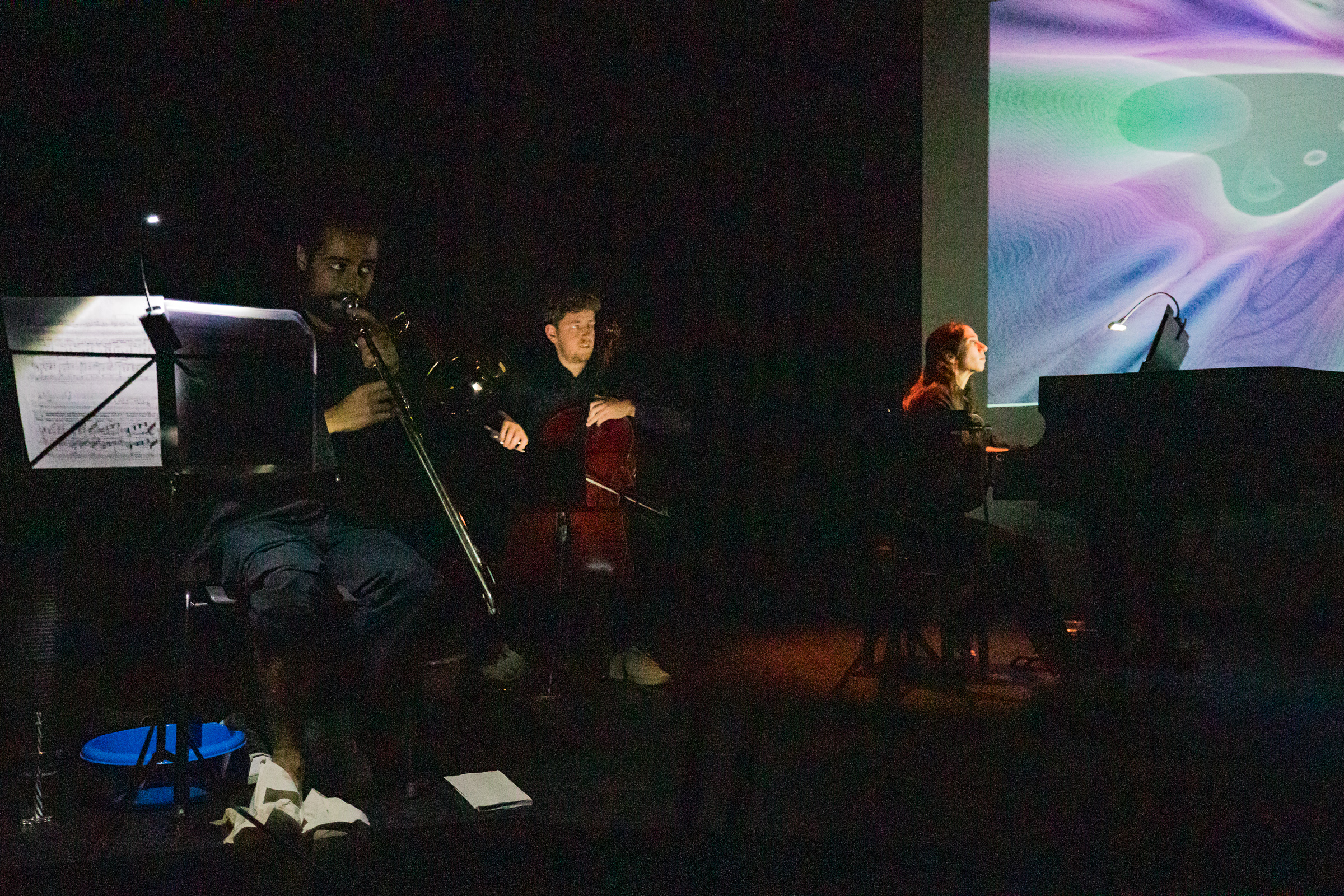
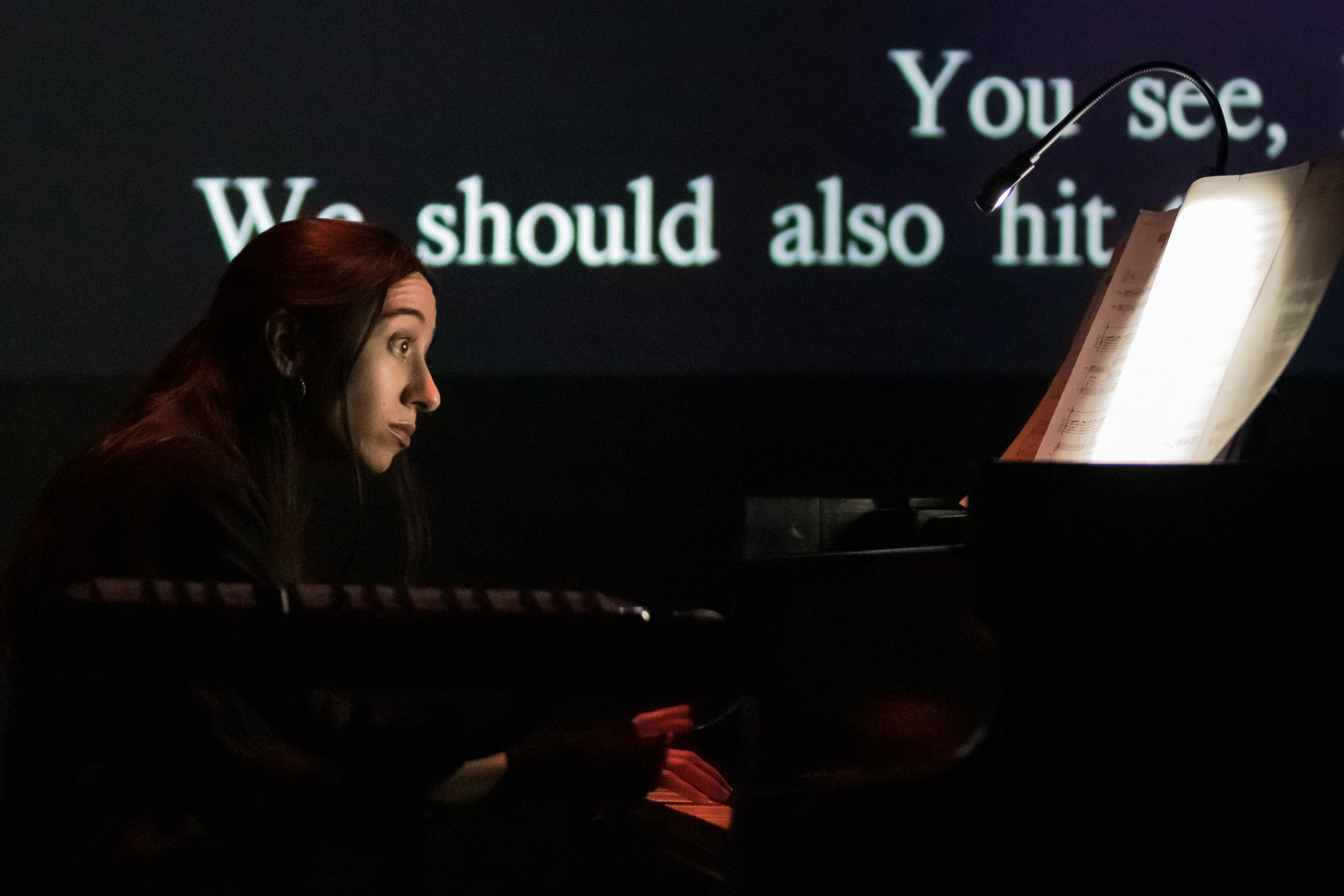
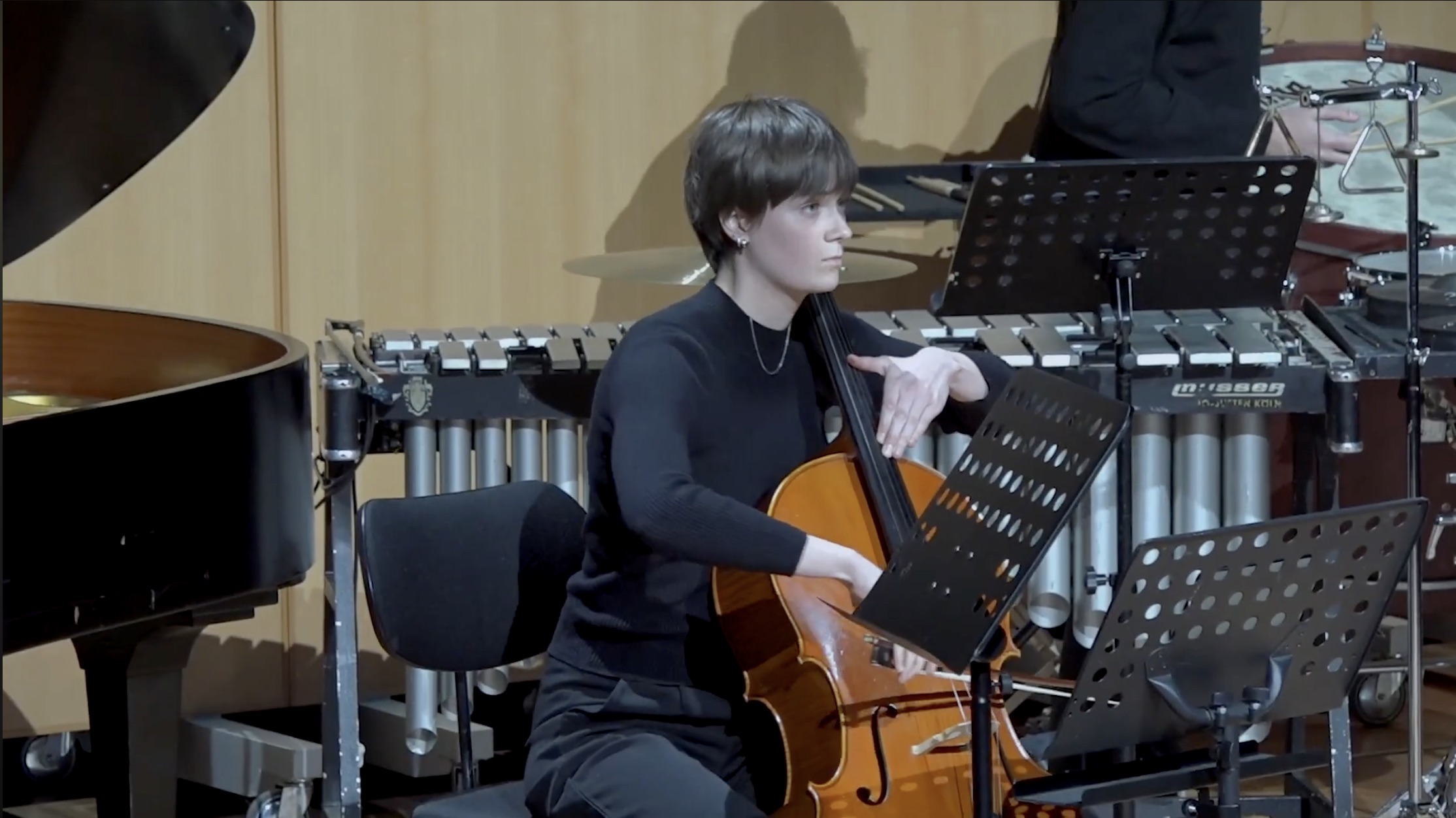
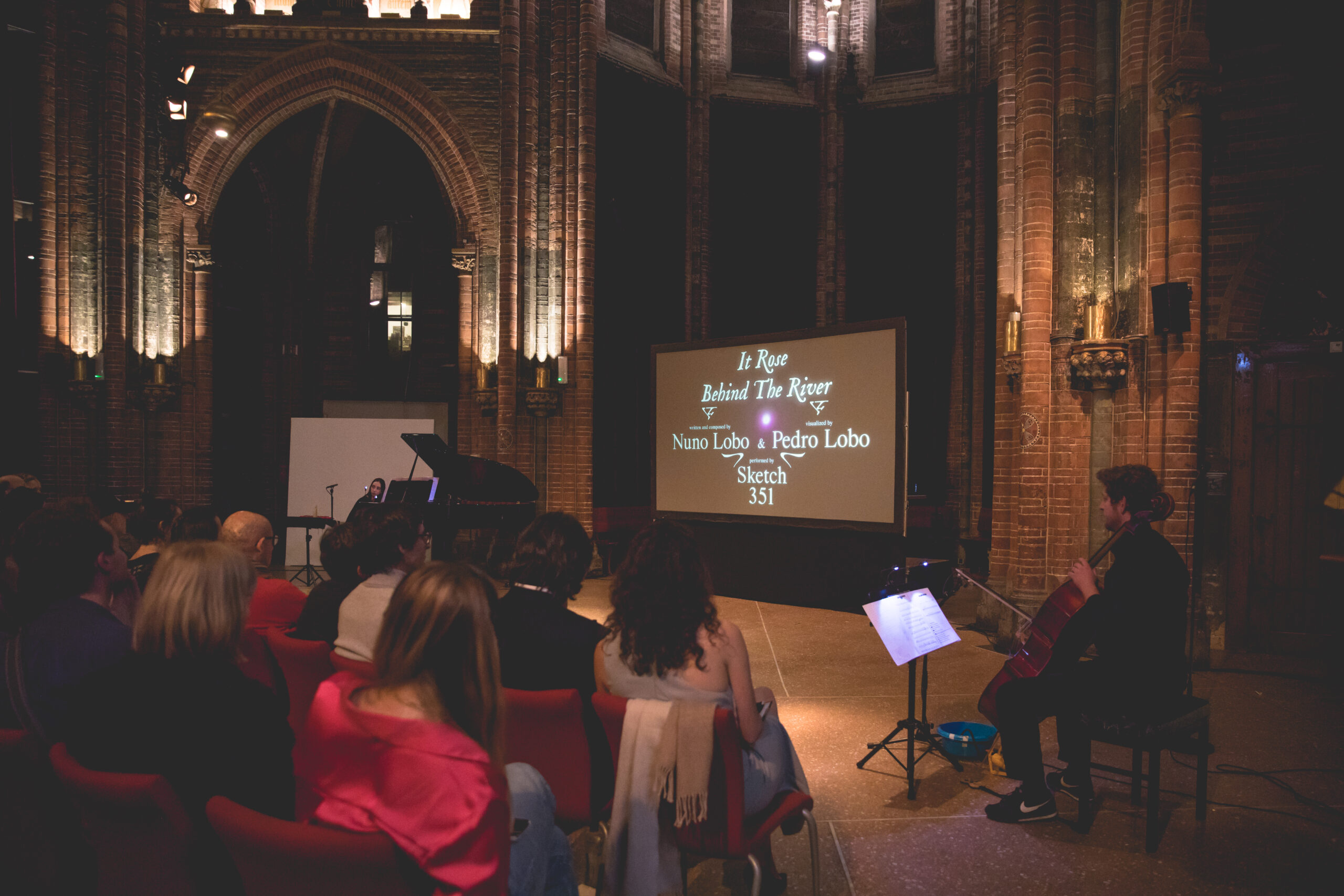
In It Rose Behind The River, the melodies were created through close collaboration with the instrumentalists, shaped by their interpretations of their characters and their lines in the script. The composer works as a director, while the musicians perform as actors. At the same time, the music has the task to set the right mood for the narrative (similar to a soundtrack), while giving space for the musical dialogues to lead.
Through a fable-like libretto, we imagined a world where everyone tries to run away from adulthood. Our main characters are two children, Renn and Elena, that depart on a journey towards a mysterious light on the horizon – a light said to be the only way to escape growing up. Along their way, they encounter different creatures and learn the stories each one has to tell.
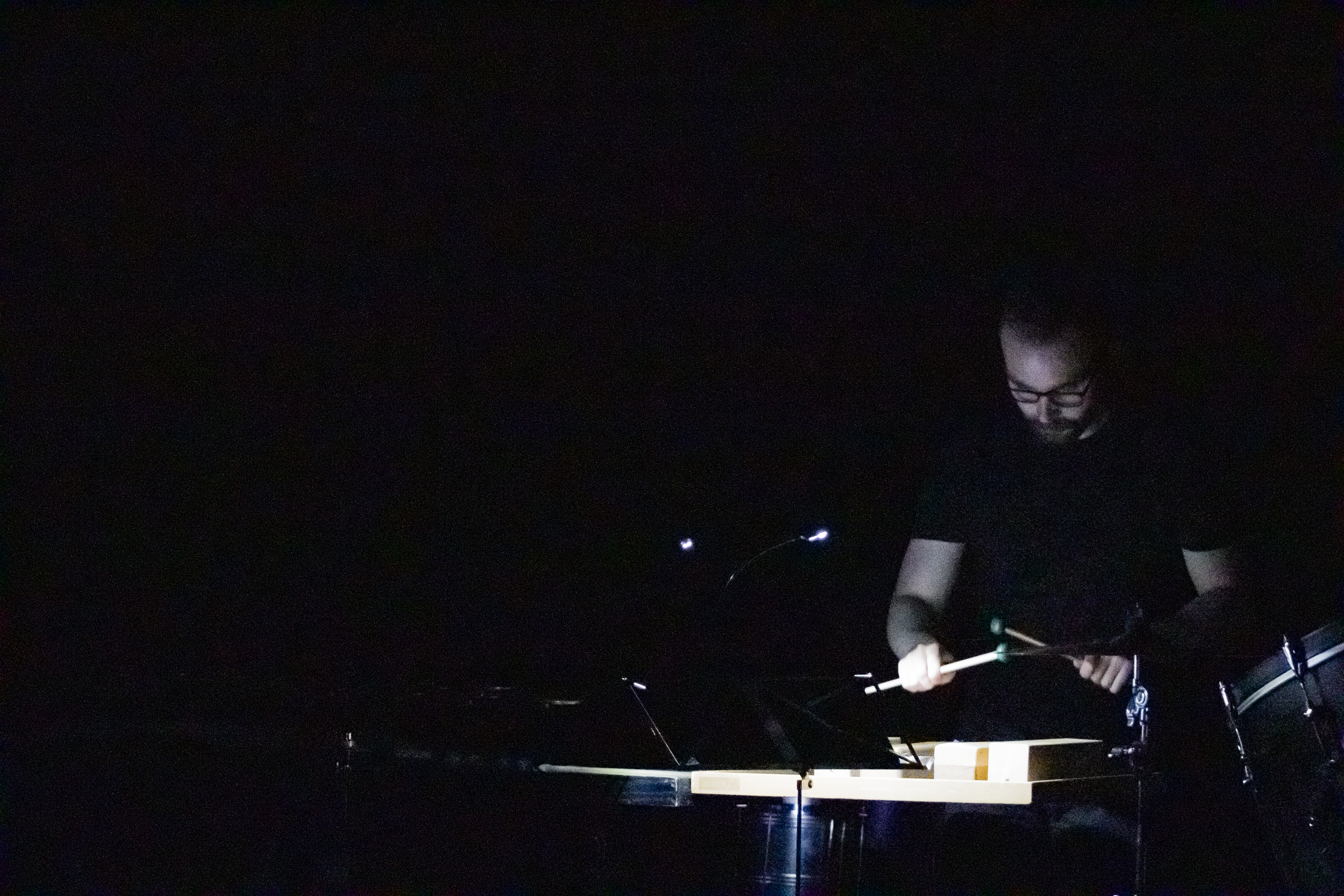
The music, composed by Nuno Lobo, is the result of a close collaboration with ensemble Sketch351. The instrumentalists become “the singers” that are giving voice to a character: The piccolo is Elena (girl), the trombone is Renn (boy), the melodica is Mr. Larva, the bass drum is Mr. River, the kazoo is Mr. Shadow and the cello is Mr. Tree.
Each of them has guidelines on how to impersonate these characters, with some freedom to interpret the text. The music also sets the mood for the narrative (like a soundtrack), while giving space for the (musical) dialogues.
Alongside the music, Pedro Lobo’s hand-drawn illustrations animate the personalities and give a simple visual trigger for the imagination. The illustrations help to project the “childlike” atmosphere that our story contains.
These drawings are mixed with digital renders of lights, to set the mood for the different moments of the narrative.